Deep Sleep Hypnotherapy
- 4.2
- Rating
- 10.00K
- Installs
- Free
- Price

 Analysis by App-foxy
I approached Deep Sleep Hypnotherapy as a practical bedtime tool rather than a miracle cure. It is a medical-category app from Harmony Hypnosis Ltd that uses guided hypnotic meditation to help create a calmer transition into sleep. That distinction matters: the app is most useful when your difficulty is connected to a busy mind, an irregular wind-down routine, or the habit of taking daytime tension into bed.
My first impression was that its appeal is its simplicity. You are not being asked to learn a complicated sleep system or track a long list of health measurements. Instead, the experience is built around listening and allowing yourself to slow down. That makes it easy to understand, but it also means the results depend heavily on whether you can give the session a quiet, consistent place in your evening.
Where bedtime use can become frustrating
The first point where some people may get stuck is expectation. The phrase “deep sleep” can sound like a promise of an immediate, guaranteed result, but a hypnosis recording cannot switch off every kind of sleeplessness on demand. In my view, this app works better as a repeated relaxation cue than as an emergency button for a night when you are wide awake and worried about tomorrow.
You May Also Like

 Blood Strike: 2.5 Anniversary
Blood Strike’s Loadouts Turn Every Drop Into a Tactical Gamble
A close look at Blood Strike’s custom loadouts: how fast access to signature weapons reshapes its battle royale rhythm, rewards preparation, and narrows the gap between fights.

 Pandora - Music & Podcasts
Pandora’s Music Is Easy to Start, but Harder to Recover
Pandora’s strength is its low-effort path from a seed to a station. Its weak spot is how much confidence it asks you to place in connection, setup, and quiet recovery.

 8 Ball Pool
 Is Built on Rivalries, Rematches, and Routine
A close look at the rivalries, rematches, shared routines, and unanswered safety questions that turn a quick pool match into a persistent mobile community.

 Samsung Music
’s Quiet Strength Is Playing What You Already Own
Its reach comes less from spectacle than from dependable access to a personal library. That simplicity is both the app’s strongest retention engine and its ceiling.

 AccuWeather: Weather Radar
AccuWeather Review: A Quick, Clear Forecast for Everyday Decisions
For everyday plans, the best forecast is the one you can understand quickly. AccuWeather makes rain timing, radar, and local conditions easy to act on, with a few trade-offs.

 Hill Climb Racing
Why Hill Climb Racing Still Turns Crashes Into One More Run
A tiny car, a bumpy hill and one more upgrade: Hill Climb Racing keeps resurfacing because its simple chaos makes every near-miss feel personal.
More From Our News Desk
View All News


That is especially important if your sleep problem comes from pain, breathing difficulties, medication effects, intense anxiety, or another health issue. A calming audio session may still feel pleasant, but it should not replace professional advice. I would treat the app as a supportive bedtime habit, not as a diagnostic or medical treatment plan.
Another possible sticking point is the listening environment. Hypnotic meditation asks for enough attention to follow the voice, at least during the beginning of a session. If you start it while checking messages, watching television, or moving around the room, the effect can feel weak. The app cannot create a peaceful setting by itself. I got more from it when I prepared the room first and made the recording the final activity before sleep.
There is also a personal preference issue. Some listeners relax quickly when a spoken voice guides their attention; others find any voice distracting once they are tired. If you normally sleep best with silence, a fan, or ordinary ambient sound, this approach may not suit you. In that case, the usual alternative is a simple sleep-sound app or a timer-based audio track rather than hypnosis.
The app is free to install, which makes trying the basic experience relatively easy. However, in-app purchases range from $9.99 to $49.99 per item. I would not buy anything simply because one session did not work on the first night. Give the free experience a fair, consistent trial first, then decide whether the paid material fits your routine and budget.
What I would check before blaming the app
Before starting a session, I would check the obvious but often overlooked details: the phone has enough battery, the volume is audible without being uncomfortable, and the device is positioned where the speaker will not be covered by bedding. These small details make a surprisingly large difference to spoken relaxation.
I would also avoid placing the phone directly under a pillow. Apart from making the voice harder to hear, that can make the device warm and uncomfortable. A bedside table is a better choice. If headphones are your preference, use them only if they are comfortable and safe for you to wear while resting. For many people, the phone speaker is simpler because there is no cable or earbud pressure to interrupt relaxation.
Because the current version is 2.34 and the app supports Android 7.0 or later, compatibility should be straightforward on many older Android phones as well as newer devices. Still, an older phone can behave differently from a recent one, especially when other apps are active. Closing demanding background apps and restarting the phone are sensible first steps if playback behaves strangely.
I would keep the first test deliberately simple. Open the app, choose the sleep-focused material available to you, set a comfortable volume, and listen without changing settings repeatedly. Constantly checking whether the session is “working” defeats the purpose. The useful test is not whether you fall asleep at a precise moment, but whether your body and thoughts feel less activated by the end.
It is worth deciding in advance whether you want to remain awake for the complete recording or allow yourself to drift off. For a bedtime session, I prefer the second approach. I start it after brushing my teeth and putting the room in order, then leave the phone alone. If you need to hear every word for a particular reason, use the session earlier in the evening instead of treating it as the final sleep aid.
A dependable routine for recovering from a poor session
If the first attempt does not help, I would not immediately conclude that the app is ineffective. I would troubleshoot the routine in a fixed order. First, reduce interruptions. Silence notifications, move the phone away from your hand, and make sure the room is not too bright. Second, lower the volume enough that the voice feels gentle rather than attention-grabbing. Third, repeat the same setup on another evening instead of changing several variables at once.
This approach is useful because sleep is easily affected by context. A late meal, an argument, an unusually demanding workday, or a sudden change in schedule can overpower a familiar relaxation recording. The app may still be doing its part by helping you settle somewhat, even if it does not produce a full night of sleep.
If playback stops or the app seems unresponsive, I would close and reopen it, check the phone’s audio output, and restart the device if necessary. I would also make sure another app is not currently using the speaker or sending audio to a forgotten Bluetooth device. These are general checks, but they are more productive than repeatedly tapping the same control while becoming more frustrated.
When a session is interrupted, I would avoid starting over several times. Repeatedly searching for the exact point where you stopped turns bedtime into a technical task. A better recovery is to pause the troubleshooting, take a few quiet breaths, and either resume once or end the attempt for the night. The goal is rest, not a perfect app session.
For users considering paid content, I would make the decision after evaluating consistency rather than intensity. Ask yourself whether the voice and style help you settle across several ordinary evenings. If the answer is no, purchasing more material is unlikely to solve the underlying mismatch. If the answer is yes, the extra cost may be reasonable for someone who values guided audio and expects to use it regularly.
One practical tip is to separate evaluation from desperation. Do not judge the app only on a night when you are watching the clock and urgently need sleep. Try it during a lower-pressure evening first. That gives you a clearer sense of whether the hypnotic style feels natural to you, without the added pressure of expecting an instant result.
When the app is not the real cause of the problem
Sometimes the difficulty is not the recording, the phone, or the setup. If you are sleeping at inconsistent times, using bright screens until the moment you lie down, or drinking stimulating beverages late in the day, a relaxation session has to work against a larger pattern. In that situation, I would use the app as one part of a wind-down routine rather than asking it to compensate for everything else.
A realistic example would be someone who finishes work late, answers messages in bed, and then starts the session while still thinking about unfinished tasks. I would suggest a short buffer before listening: write down tomorrow’s priorities, dim the room, put the phone on its intended audio position, and then begin. The recording becomes a clear boundary between problem-solving time and rest. That workflow is more valuable than simply pressing play earlier.
The app is also not the right first choice for someone who wants detailed sleep analysis. Its core appeal is guided hypnosis, not a dashboard of measurements or a coaching program built around extensive tracking. A sleep-tracking wearable or a structured behavioral sleep program may be more suitable if you want patterns, schedules, or progress data to guide your decisions.
Likewise, people with persistent or severe insomnia should not rely on a meditation app alone. If poor sleep continues, affects daytime safety, or comes with worrying symptoms, professional medical guidance is the sensible next step. The app can sit alongside healthy advice, but it should not delay it.
On the other hand, I can see a clear use case for people who dislike complicated wellness platforms. Deep Sleep Hypnotherapy is aimed at the listener who wants a spoken relaxation experience and does not want to spend the evening adjusting charts, goals, or sleep scores. Its focused design is a strength when simplicity helps you stay consistent.
The public response gives it a useful level of credibility without making it universally convincing: it holds a 4.2 average from around 500 ratings, with over 100 written reviews and 10K-plus installs. I read those figures as evidence that it has found an audience, not as proof that every listener will respond to hypnosis in the same way. Sleep is too individual for a rating to settle that question.
How it compares with familiar alternatives
Compared with ordinary relaxing music, hypnosis has a more directed structure. Music can create atmosphere, but a guided voice can give your attention something gentle to follow. That may be useful when your thoughts keep circling. The trade-off is that a voice can feel intrusive if you prefer to let your mind wander without instruction.
Compared with white-noise or nature-sound apps, this app is less useful for masking a noisy environment and more useful for changing your mental state. If traffic, housemates, or a snoring partner are the main problem, sound masking may be the better first purchase. If the room is quiet but your thoughts remain active, guided meditation has a stronger case.
Compared with structured cognitive behavioral sleep programs, Deep Sleep Hypnotherapy is easier to begin but less comprehensive. It does not replace the value of examining habits, beliefs about sleep, and long-term patterns with a qualified professional. Its advantage is low effort; its limitation is that low effort cannot address every cause of insomnia.
The age rating is Everyone, so the app is broadly presented for general audiences. I would still make individual judgment for children, older adults, or anyone with a condition that affects sleep or responsiveness. “Everyone” describes the content classification, not a guarantee that the method is appropriate for every person in every medical situation.
My practical verdict after using it as a bedtime tool
I would recommend Deep Sleep Hypnotherapy to a friend who wants a straightforward spoken meditation for winding down and is open to hypnotic guidance. The strongest way to use it is deliberately: prepare the room, remove distractions, keep the volume comfortable, and repeat the same routine long enough to judge the experience fairly.
I would not recommend buying the higher-priced in-app material immediately, nor would I suggest it as the sole response to ongoing sleep difficulties. The free entry point makes experimentation sensible, while the paid range means you should be clear about how often you will use it before spending more.
The developer, Harmony Hypnosis Ltd, has kept the concept focused around relaxation and sleep rather than turning it into an overloaded health platform. That focus is exactly why it may work for some people. It is also why users seeking tracking, detailed sleep education, or clinical support may find a different option more appropriate.
My final view is balanced: this is best treated as a repeatable bedtime cue, not a guaranteed sleep switch. When the problem is a restless mind and the listening environment is suitable, it can be a comfortable addition to an evening routine. When the problem is medical, environmental, or deeply persistent, the app is better used as a small supporting tool while you address the larger issue.
FAQs for Deep Sleep Hypnotherapy
01What is Deep Sleep Hypnotherapy and how does it work?
Deep Sleep Hypnotherapy is an audio-based wellness app designed to help users relax before bedtime and develop healthier sleep habits. It typically combines guided hypnosis, calming narration, breathing exercises, and soothing background sounds. After selecting a suitable session, you listen with headphones or your device while lying comfortably. The app is intended to support relaxation, not replace professional medical treatment.
02Can Deep Sleep Hypnotherapy really help with insomnia or poor sleep?
The app may help some people fall asleep more easily by reducing bedtime stress, quieting racing thoughts, and creating a consistent nighttime routine. However, results differ from person to person, and hypnotherapy should not be considered a guaranteed cure for insomnia. Persistent sleep difficulties, loud snoring, breathing interruptions, or severe daytime tiredness should be discussed with a qualified healthcare professional.
03Is Deep Sleep Hypnotherapy safe to use every night?
For most adults, listening to a relaxation or sleep-hypnotherapy session at bedtime is generally considered low risk. You should use it while resting safely, never while driving, cycling, or operating machinery. Read the app’s health and safety information carefully, and seek professional advice if you are pregnant, have a diagnosed sleep disorder, experience unusual reactions to hypnosis, or are receiving treatment for a mental health condition.
04Does Deep Sleep Hypnotherapy require an internet connection or headphones?
The exact requirements depend on the version of the app and the content you choose. Some sessions may stream over the internet, while others can be downloaded for offline listening, which is useful when traveling or avoiding interruptions at night. Headphones are usually optional because the audio can play through a phone speaker, although comfortable headphones may provide a more immersive experience.
05Is Deep Sleep Hypnotherapy free to download, and are there in-app purchases?
The app may be available to download at no initial cost, but access to the complete library can depend on subscriptions, premium sessions, or one-time purchases. Before starting a trial, check the store listing for pricing, renewal terms, and cancellation instructions. It is also worth confirming whether downloads, offline playback, sleep timers, and additional programs are restricted to paid users.
Pros
- Calming narration helps create a relaxing bedtime routine.
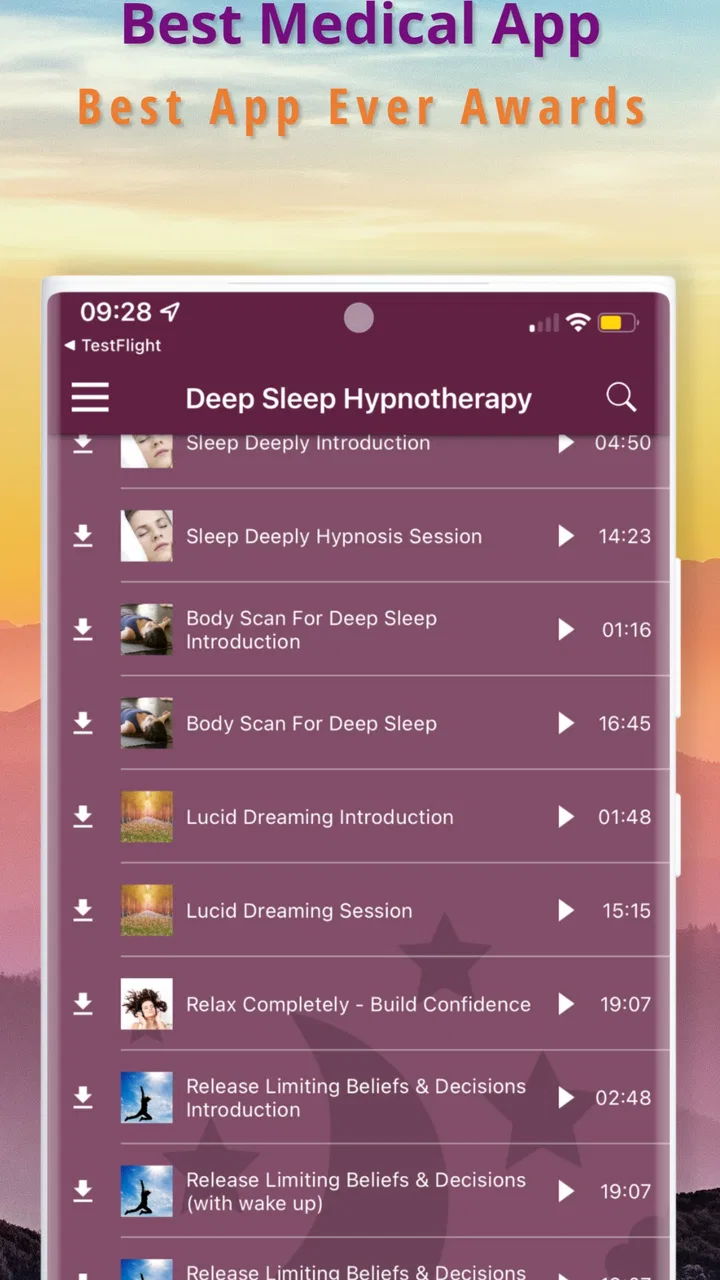
- Simple interface makes sessions easy to start and follow.
- Multiple tracks support different sleep and relaxation goals.
- Can be used with headphones or a phone speaker.
- Suitable for short relaxation sessions before bedtime.
Cons
- Some content may require an in-app purchase or subscription.
- Hypnotherapy results can differ significantly between users.
- Narration style may not appeal to everyone.
- Audio sessions may become repetitive with frequent use.
- Requires a quiet environment for the best listening experience.

Deep Sleep Hypnotherapy
Gallery